
Newton's Laws of Motion
https://sciencenotes.org/newtons-laws-of-motion/

This is why we wear seatbelts!!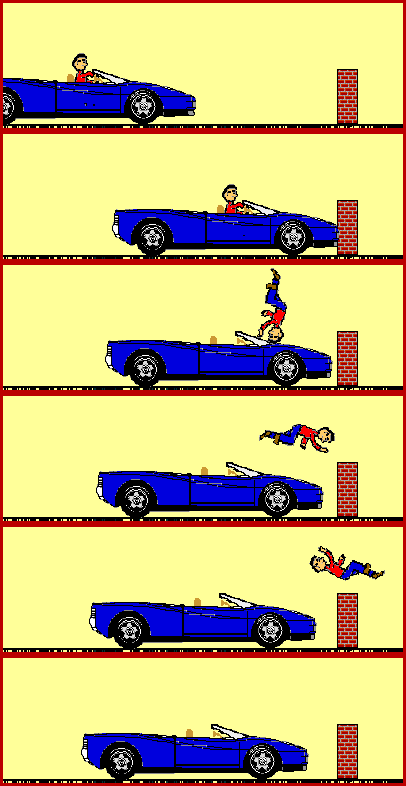
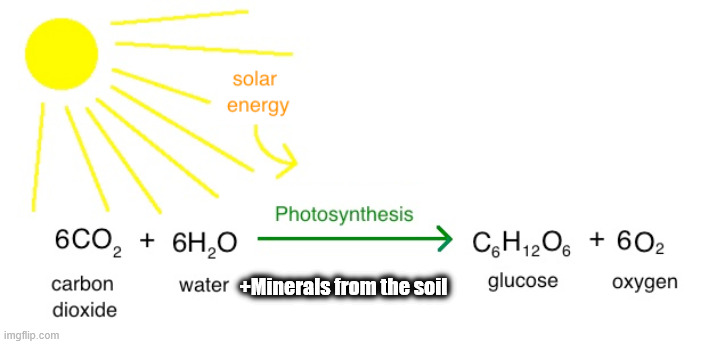
This is an indisputable law in biochemistry which is the combination of biology and chemistry.
Most life would not exist on our planet without photosynthesis.
CO2 is the building block for life and plays a critical role as a beneficial gas. CO2s optimal level for life is 900 parts per-million. Our Current, atmospheric level of CO2 is just less than half of that at 430 PPM.
DeathbyGREENING!
52 responses |
Started bymetmike - May 11, 2021, 2:31 p.m.
12 Fundamental laws of Physics
https://www.allenoverseas.com/blog/12-fundamental-laws-of-physics-everyone-should-know/
Some people's not always scientific interpretation:
https://wisdomuncover.com/7-laws-of-nature/
https://www.unstoppablerise.com/seven-universal-laws/
https://en.wikipedia.org/wiki/Scientific_law
Scientific laws or laws of science are statements, based on repeatedexperiments or observations, that describe or predict a range of natural phenomena.[1] The term law has diverse usage in many cases (approximate, accurate, broad, or narrow) across all fields of natural science (physics, chemistry, astronomy, geoscience, biology). Laws are developed from data and can be further developed through mathematics; in all cases they are directly or indirectly based on empirical evidence. It is generally understood that they implicitly reflect, though they do not explicitly assert, causal relationships fundamental to reality, and are discovered rather than invented
+++++++++++++++=
https://en.wikipedia.org/wiki/Scientific_method
The scientific method is an empirical method for acquiring knowledge through careful observation, rigorous skepticism, hypothesis testing, and experimental validation. Developed from ancient and medieval practices, it acknowledges that cognitive assumptions can distort the interpretation of the observation. The scientific method has characterized science since at least the 17th century. Scientific inquiry includes creating a testable hypothesis through inductive reasoning, testing it through experiments and statistical analysis, and adjusting or discarding the hypothesis based on the results

The scientific method is often represented as an ongoing process. This diagram represents one variant, and there are many others.
++++++++++++++
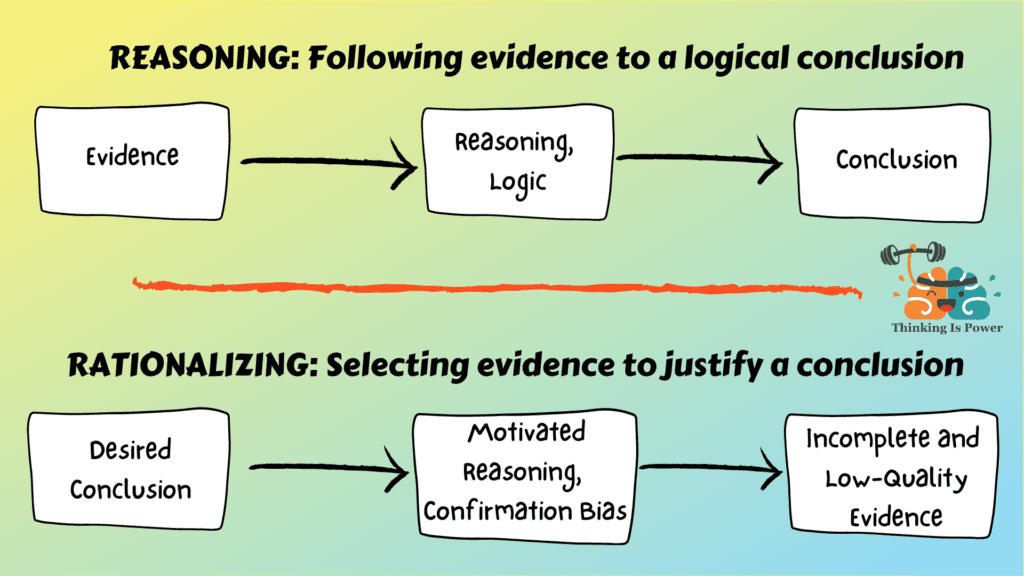
metmike: In contrast to what most of us do, trying to prove ourselves right by finding/using sources that repeat to us what we think that we know.........the scientific method takes a SKEPTICAL APPROACH of ourselves.
We vigorously fact check what we think that we know, first and foremost. We try to prove ourselves WRONG! We look for flaws in what we think that we know. Human cognitive bias causes us to naturally fight this, so we must intentionally apply the scientific method to offset our minds natural state.
https://thinkingispower.com/why-trying-to-prove-yourself-wrong-is-the-key-to-being-right/
https://en.wikipedia.org/wiki/Echo_chamber_(media)

In news media and social media, an echo chamber is an environment or ecosystem in which participants encounter beliefs that amplify or reinforce their preexisting beliefs by communication and repetition inside a closed system and insulated from rebuttal.[2][3][4] An echo chamber circulates existing views without encountering opposing views, potentially resulting in confirmation bias. Echo chambers may increase social and political polarization and extremism.[5] On social media, it is thought that echo chambers limit exposure to diverse perspectives, and favor and reinforce presupposed narratives and ideologies.[4][6]
The term is a metaphor based on an acoustic echo chamber, in which sounds reverberate in a hollow enclosure. Another emerging term for this echoing and homogenizing effect within social-media communities on the Internet is neotribalism.
The Internet has expanded the variety and amount of accessible political information. On the positive side, this may create a more pluralistic form of public debate; on the negative side, greater access to information may lead to selective exposure to ideologically supportive channels.[5] In an extreme "echo chamber", one purveyor of information will make a claim, which many like-minded people then repeat, overhear, and repeat again (often in an exaggerated or otherwise distorted form)[9] until most people assume that some extreme variation of the story is true.[10]
The echo chamber effect occurs online when a harmonious group of people amalgamate and develop tunnel vision. Participants in online discussions may find their opinions constantly echoed back to them, which reinforces their individual belief systems due to the declining exposure to other's opinions.[11] Their individual belief systems are what culminate into a confirmation bias regarding a variety of subjects. When an individual wants something to be true, they often will only gather the information that supports their existing beliefs and disregard any statements they find that are contradictory or speak negatively upon their beliefs.[12] Individuals who participate in echo chambers often do so because they feel more confident that their opinions will be more readily accepted by others in the echo chamber.[13] This happens because the Internet has provided access to a wide range of readily available information. People are receiving their news online more rapidly through less traditional sources, such as Facebook, Google, and Twitter. These and many other social platforms and online media outlets have established personalized algorithms intended to cater specific information to individuals’ online feeds. This method of curating content has replaced the function of the traditional news editor.[14] The mediated spread of information through online networks causes a risk of an algorithmic filter bubble, leading to concern regarding how the effects of echo chambers on the internet promote the division of online interaction.[15]
Members of an echo chamber are not fully responsible for their convictions. Once part of an echo chamber, an individual might adhere to seemingly acceptable epistemic practices and still be further misled. Many individuals may be stuck in echo chambers due to factors existing outside of their control, such as being raised in one
Cognitive biases
11 responses |
Started by metmike - April 24, 2022, 11:34 a.m.