The Impact of Hydropower Revealed
While hydropower dams will continue to play a role in our nation’s energy portfolio, it is important to acknowledge that both reservoirs and hydropower generation contribute to greenhouse gas emissions.
++++++++++++++++++++
Most people that read those articles will assume they just got educated and will store it as knowledge in their brains that redefines what they think that they know about hydro-power.
The main indirect but powerful result of that redefining will be the view that "wind and solar are better, cleaner alternatives"
In the age of gatekeepers using powerful tools to manipulate our opinions and thoughts for their self serving agenda and profits and considering the corrupted science of the fake climate crisis that dominates mainstream everything in this realm....... this seems to be the main motive, without fact checking.
+++++++++++++++++
Let's take a look at the sources:
https://en.wikipedia.org/wiki/Environmental_Defense_Fund
Environmental Defense Fund or EDF (formerly known as Environmental Defense) is a United States-based nonprofitenvironmental advocacy group. The group is known for its work on issues including global warming, ecosystem restoration, oceans, and human health, and advocates using sound science, economics and law to find environmental solutions that work. It is nonpartisan, and its work often advocates market-based solutions to environmental problems.
++++++++++
They get a spotless review from Wikepedia(because Wikepedia is a climate crisis cheerleader) and I agree they do a lot of great work. However, scrolling down, I note several issues that tell me they are wrapped in the fraudulence of the fake climate crisis, which of course all the environmental groups are.
+++++++++++++++
https://www.americanrivers.org/
AMERICAN RIVERS
Life depends on rivers
It’s not just that rivers make our lives better. We can’t survive without them.
https://www.americanrivers.org/
Removing a dam and allowing water to flow naturally is the single most impactful way to improve a river’s health.There are more than 90,000 inventoried dams — and up to 400,000 dams total — in our country. Up to 85 percent of them are unnecessary, harmful, and even dangerous. We must remove thousands quickly. That’s why American Rivers and our partners will remove 30,000 dams by 2050.
++++++++++++++
So we know that American Rivers is ANTI hydropower by their mission statement and work above. I give them no credibility when they write a hit piece on hydropower based on its negative impact of the fake climate crisis.
++++++++++++++++++++++++++
Most importantly here is to actually understand what hydropower is and how it works. Extremely fascinating stuff!
https://www.energy.gov/eere/water/types-hydropower-plants
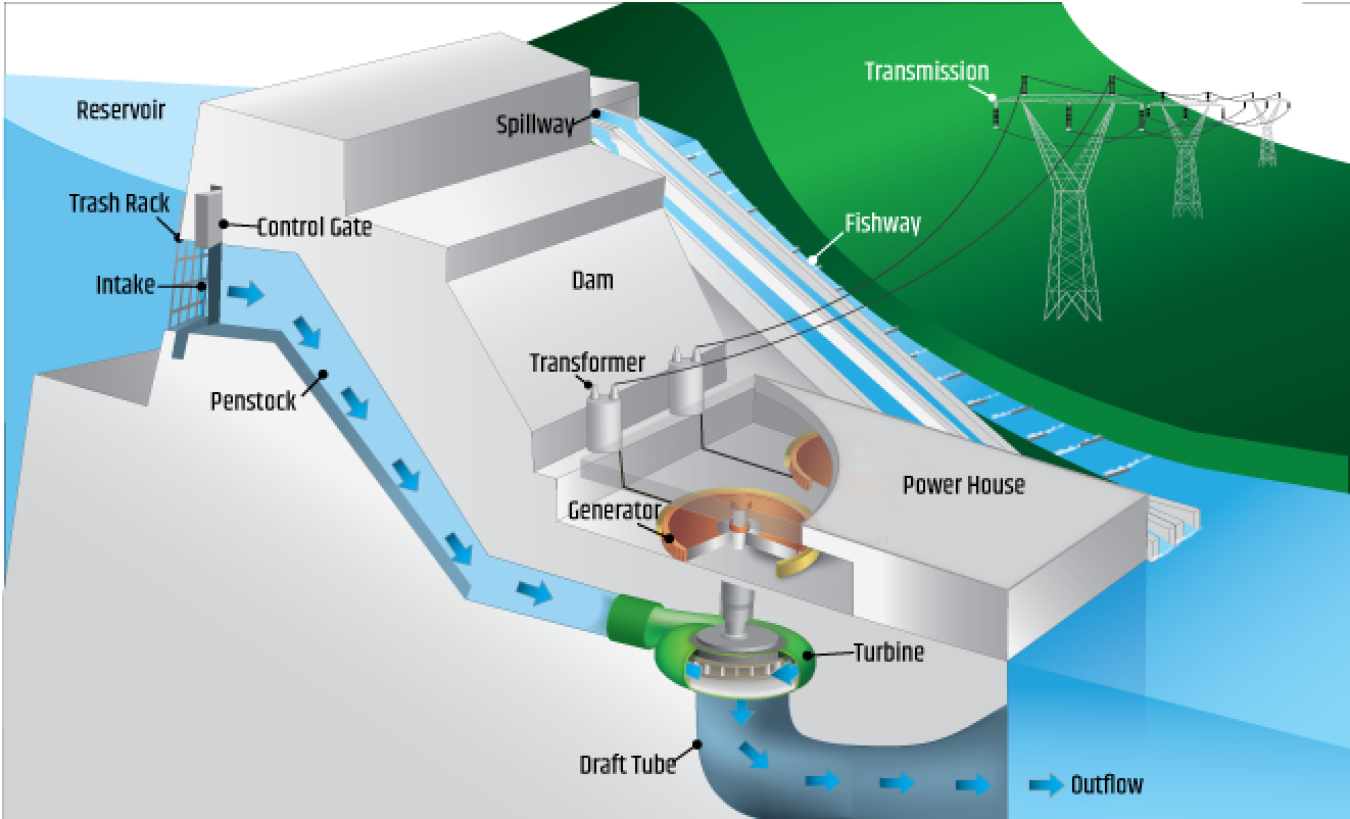
IMPOUNDMENT
The most common type of hydroelectric power plant is an impoundment facility. An impoundment facility, typically a large hydropower system, uses a dam to store river water in a reservoir. Water released from the reservoir flows through a turbine, spinning it, which in turn activates a generator to produce electricity. The water may be released to meet changing electricity needs or other needs, such as flood control, recreation, fish passage, and other environmental and water quality needs.
DIVERSION
A diversion, sometimes called a “run-of-river” facility, channels a portion of a river through a canal and/or a penstock to utilize the natural decline of the river bed elevation to produce energy. A penstock is a closed conduit that channels the flow of water to turbines with water flow regulated by gates, valves, and turbines. A diversion may not require the use of a dam. 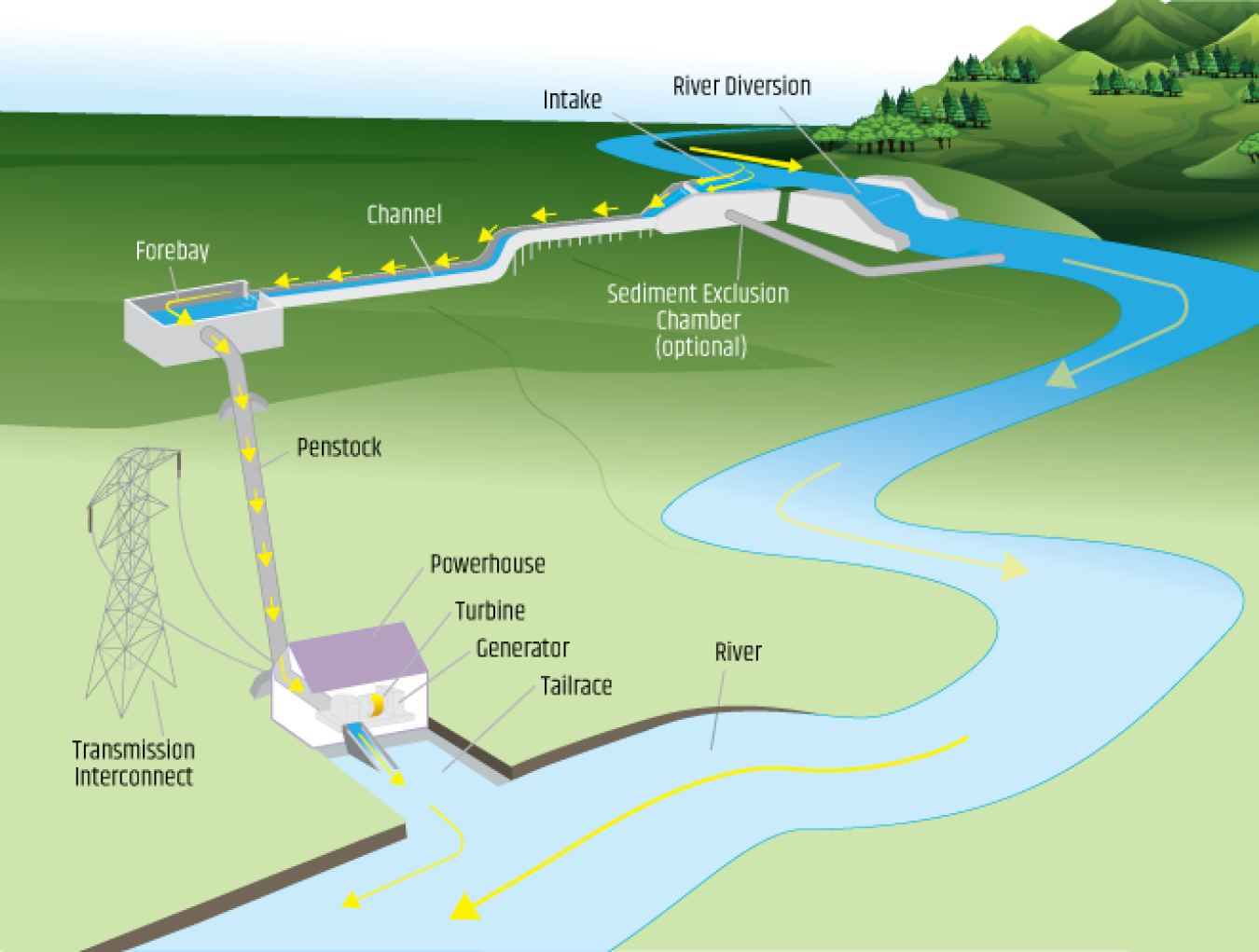
PUMPED STORAGE
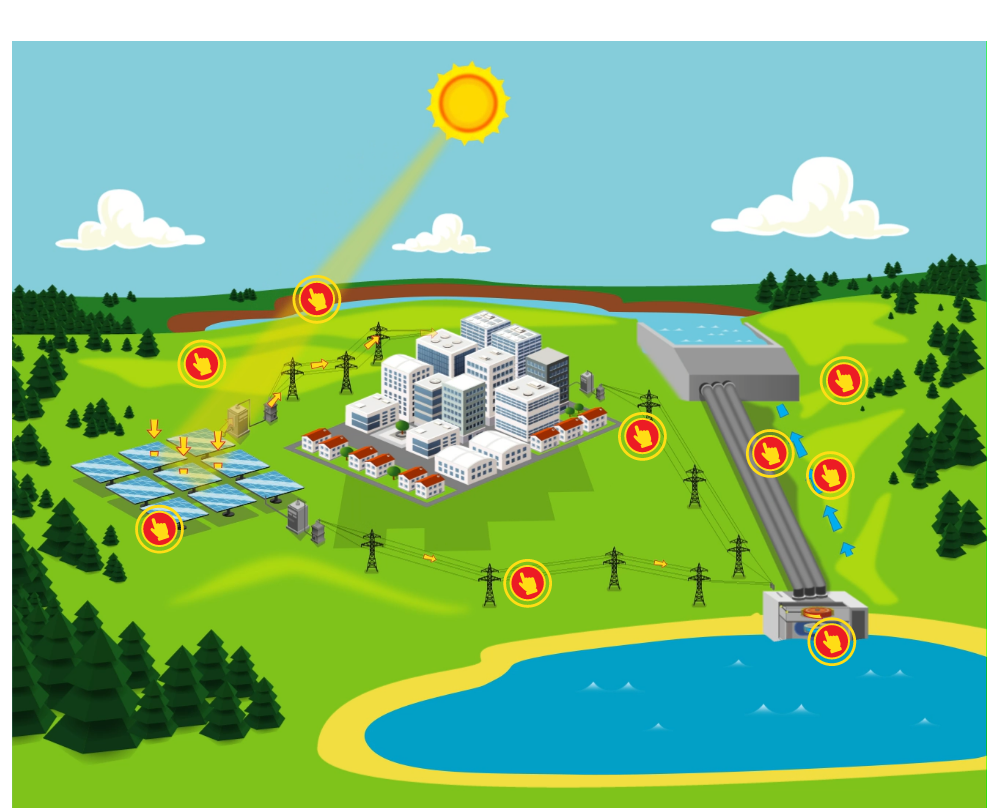
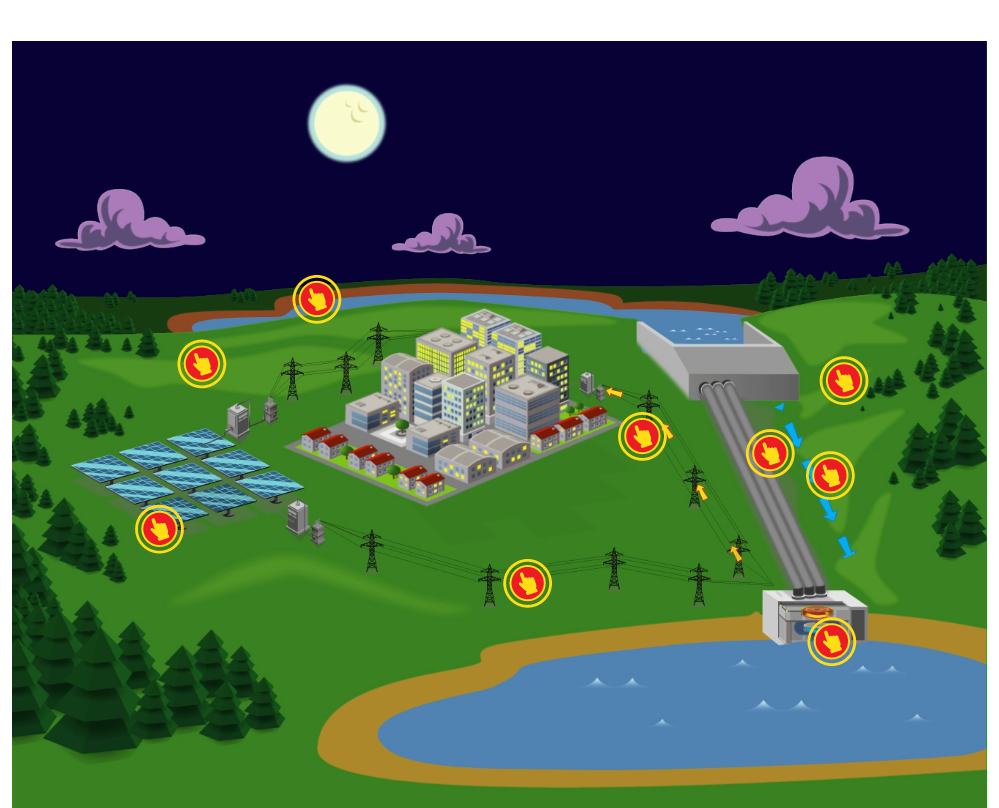
Another type of hydropower, called pumped storage hydropower, or PSH, works like a giant battery. A PSH facility is able to store the electricity generated by other power sources, like solar, wind, and nuclear, for later use. These facilities store energy by pumping water from a reservoir at a lower elevation to a reservoir at a higher elevation.
When the demand for electricity is low, a PSH facility stores energy by pumping water from the lower reservoir to an upper reservoir. During periods of high electrical demand, the water is released back to the lower reservoir and turns a turbine, generating electricity.